By: Tele Figueroa
June 20, 2026
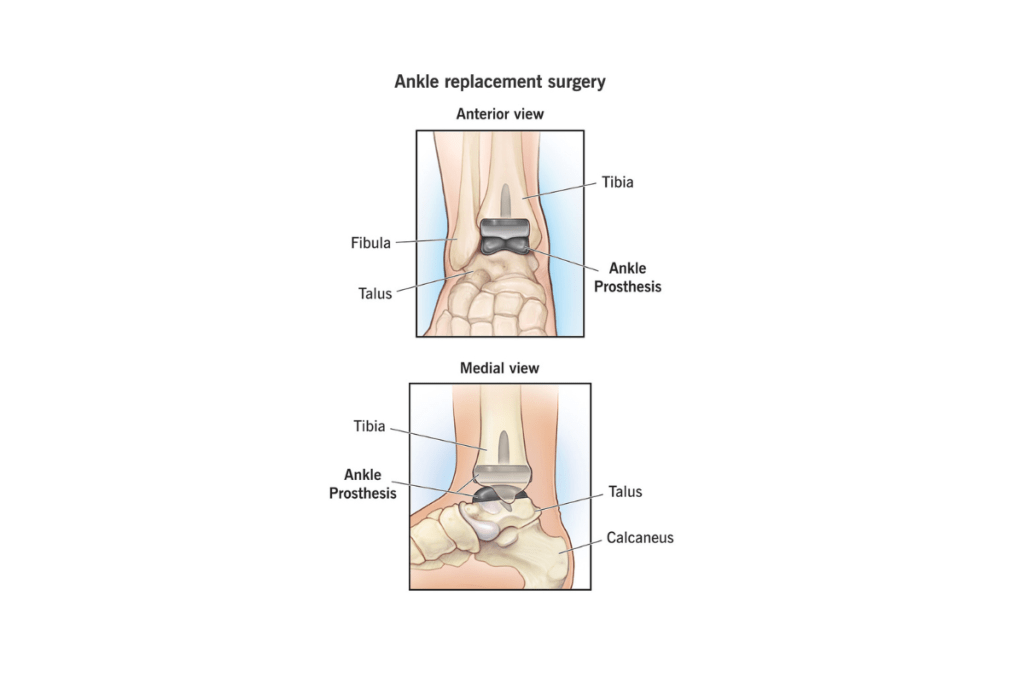

1. Introduction: What is a Total Ankle Replacement?
Total Ankle Arthroplasty (TAA) is a safe and effective surgical procedure designed to treat severe arthritis. Its primary goal is to provide reliable pain relief while preserving the natural mobility of the joint, unlike ankle fusion (arthrodesis), which leaves the ankle completely rigid.
Key Benefits
- Drastic Pain Relief: Significantly reduces the sharp, debilitating discomfort caused by osteoarthritis or rheumatoid arthritis.
- Preservation of Motion: Maintains the ability to flex and extend the foot, allowing for a more natural gait.
- Protection of Adjacent Joints: By preserving mobility, it reduces long-term stress and wear-and-tear on the knee and the surrounding bones of the foot.
2. The Ideal Profile: Why is it so effective at age 83?
There is a common misconception that advanced age is a barrier to major surgery. However, clinical data shows that patients in their 70s and 80s who maintain a low-to-moderate physical demand lifestyle often achieve the highest rates of satisfaction and long-term functionality.
At 83, the mechanical wear on an artificial implant is drastically reduced due to a more paced daily routine. Since modern implants have an average lifespan of 10 to 15 years (and often longer), it is highly unlikely that a revision surgery due to wear will be needed in the future.
Furthermore, research published in the Journal of Foot and Ankle Surgery confirms that elderly patients demonstrate post-operative improvements in daily mobility that are significantly superior to those seen in younger, high-impact individuals.
3. The Critical Diagnosis: “Bone-on-Bone” Wear
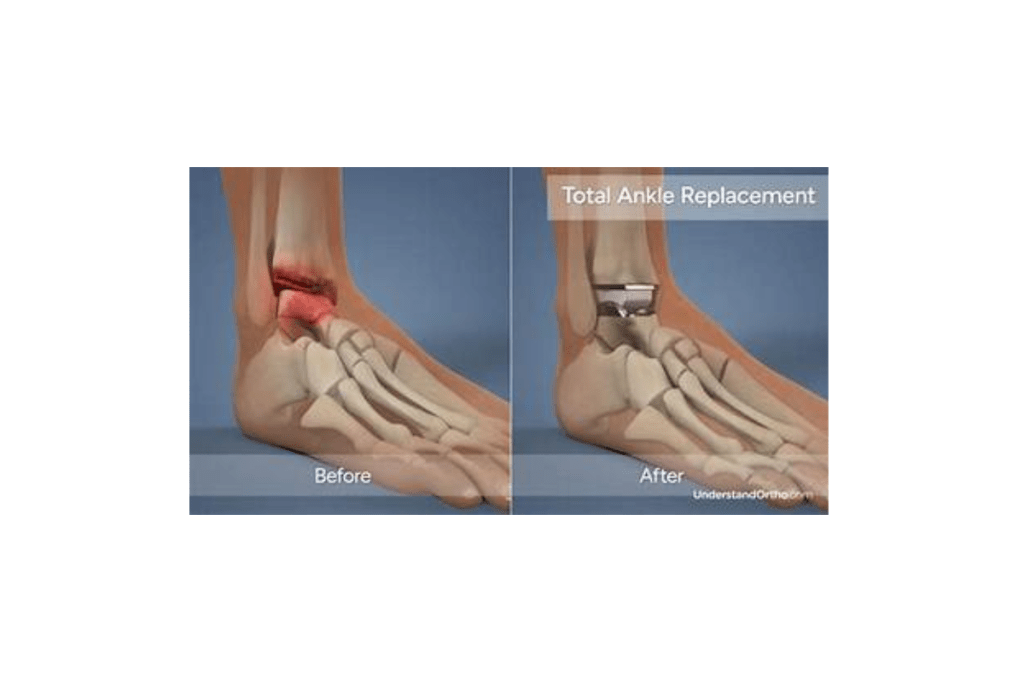
When an orthopedic surgeon confirms a “bone-on-bone” condition, it means the joint cartilage has completely worn away. Without this natural shock absorber, the bones rub directly against each other.
This severe friction explains two critical symptoms:
- Unbearable Pain: Conservative treatments (such as medication or cortisone injections) no longer provide real relief because the issue is entirely structural.
- Loss of Balance: As the joint destabilizes, the stabilizing muscles of the lower leg weaken, and the nerve receptors responsible for maintaining posture and balance while walking fail to fire correctly.
At this stage, a total ankle replacement addresses the root cause by removing the damaged bone surfaces and inserting highly polished metal components with a medical-grade plastic spacer in between, creating a smooth, painless, and stable artificial joint.
4. Ankle Replacement vs. Ankle Fusion (Arthrodesis)
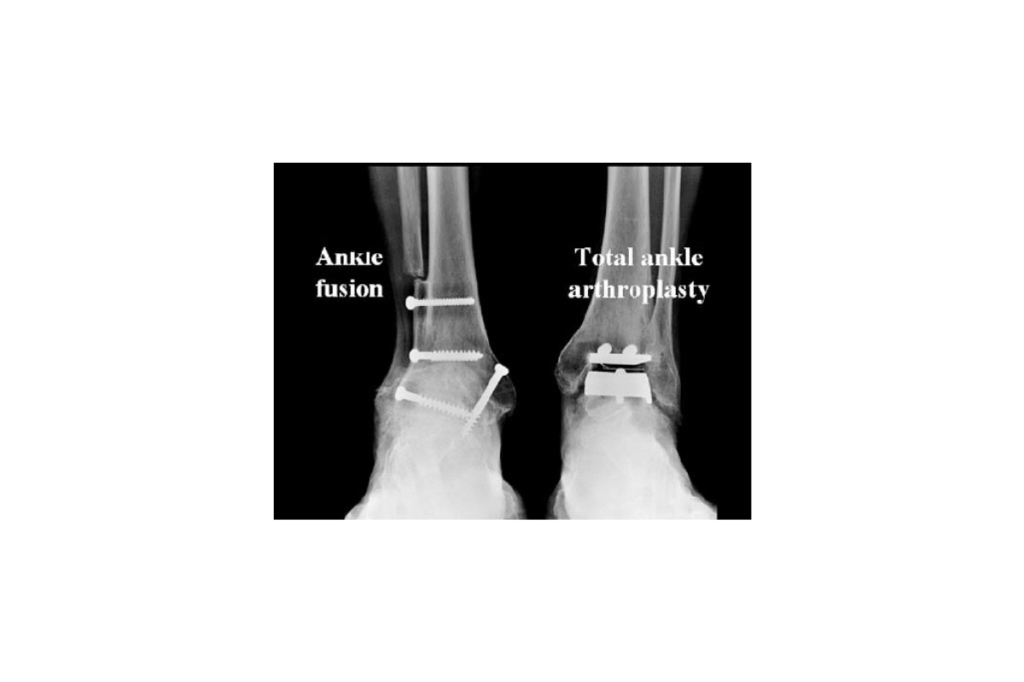
To better understand modern medical options, it is helpful to compare the two main surgical pathways:
| Feature | Total Ankle Replacement (TAA) | Ankle Fusion (Arthrodesis) |
| Mobility | Preserves the natural flexion of the foot. | Leaves the ankle joint completely rigid. |
| Gait Type | Allows for a natural walking pattern. | Alters the way you walk permanently. |
| Side Effects | Protects surrounding joints from stress. | Overloads adjacent foot joints, accelerating arthritis there. |
| Immobilization | Shorter period; earlier weight-bearing. | Longer period; requires many weeks without putting weight. |
5. Preparation Strategy: “Pre-habilitation”
Surgical success does not begin in the operating room; it starts weeks before. Engaging in targeted pre-operative physical therapy to strengthen the legs (such as pre-hab programs) is a vital strategic decision.
Strengthening the quadriceps, glutes, and the unaffected leg prior to surgery significantly reduces post-operative complications, enhances overall muscle tone, and drastically accelerates the timeline for walking with confidence after discharge.
6. Action Plan and Risk Management
At age 83, the safety of the procedure depends less on the ankle itself and more on overall systemic health. The comprehensive action plan includes:
- Strict Medical Clearance: Coordination between the primary care physician (PCP), cardiologist, and orthopedist to thoroughly review cardiovascular, pulmonary, and circulatory health.
- Bone Density Assessment: Verifying that bone quality is sufficient to securely anchor the prosthetic components.
- Anesthesia Planning: Evaluating the use of a regional nerve block (which numbs only the leg) combined with light sedation. This approach is much gentler on the body and mind than general anesthesia and keeps post-operative pain tightly controlled for the first 24 to 48 hours.
- Ligament Evaluation: Confirming that the ligaments surrounding the ankle are stable enough to support the implant or determining if ligament balancing will be required during the procedure.
7. Home Logistics: Preparing for a Safe Return
Having a dedicated support network at home is essential. To ensure a safe recovery after discharge, the living environment should be temporarily adapted:
- Obstacle-Free Pathways: Remove all loose rugs, cords, or small furniture. The walker or cane will require completely clear hallways.
- Bathroom Safety: Install a shower chair, place grab bars on the walls, and use a raised toilet seat modifier.
- Recovery Station: Set up a favorite armchair or bed space with everything within arm’s reach (medications, water, phone, chargers) to minimize unnecessary trips during the initial weeks.
- Advance Equipment Procurement: Secure prescriptions early for the walker, crutches, or specialized orthopedic boot that will be utilized during the initial phase of recovery.
8. Final Reflection: Overcoming the Fear
Feeling anxious before a major surgery is a completely natural human response. However, when weighing the options, it is vital to remember that remaining in the current state—with excruciating pain and a loss of balance—poses a very real risk of falling, which can be far more hazardous at this stage of life than the surgery itself.
The ultimate goal at 83 is to reclaim quality of life, maintain independence, enjoy family, and move without suffering.
Key Questions for My Orthopedic Surgeon
Surgery & Implant Details
- What specific model or type of total ankle prosthesis do you plan to use for my case?
- Based on the current quality of my bones and ligaments, do you feel a total ankle replacement remains the best option for me compared to an ankle fusion (arthrodesis)?
- What is the estimated duration of the surgery, and how many days of hospital stay do you anticipate for a patient of my profile?
Anesthesia & Pain Management
- Is a regional nerve block combined with light sedation an option for me instead of general anesthesia?
- What is the post-operative pain management protocol during the first 48 hours once the initial anesthesia wears off?
Recovery & Timeline
- What is the expected non-weight-bearing timeline after surgery before I can start putting pressure on the foot?
- When do you estimate I will be cleared to resume active, post-operative physical therapy?
- Could you provide the prescriptions or specifications for the durable medical equipment (DME) I will need at home—such as a walker or a specific orthopedic boot—so I can have them ready in advance?


Leave a comment