Why does a small town in Puerto Rico celebrate Samuel F. B. Morse? (From the Tragedy of Washington to the Runaway Horses of Puerto Rico.)
By: Tele Figueroa
May 27, 2026
In 1825, Samuel Morse made his living as a portrait painter in Washington D.C., hundreds of miles away from the home he shared with his wife, Lucretia, in New Haven. In those days, the world moved slowly. News traveled at the weary pace of horses and the mercy of the weather; letters took days, sometimes weeks, to carry the echo of a loved one’s voice to its destination.
Then came the letter that would haunt him for the rest of his days. Lucretia was gravely ill. Morse left his work and immediately set off for home, his heart in his throat but clinging to hope. What he did not know was that time had already won the race: a second letter was already on its way. Lucretia had passed away. By the time the painter crossed the threshold of his home, his wife’s coffin already rested beneath the earth. There was no final goodbye, no whispered comfort, no parting glance. Only definitive silence and the unbearable weight of distance.
Heartbroken, Morse became obsessed with one question: how many lives, how many final moments were lost in the slow and agonizing passage of messages? In the quiet of his grief, a spark began to form: if sunlight could cross the sky in a heartbeat, why should human words have to crawl through the mud?
The Birth of the Code and Official Consecration
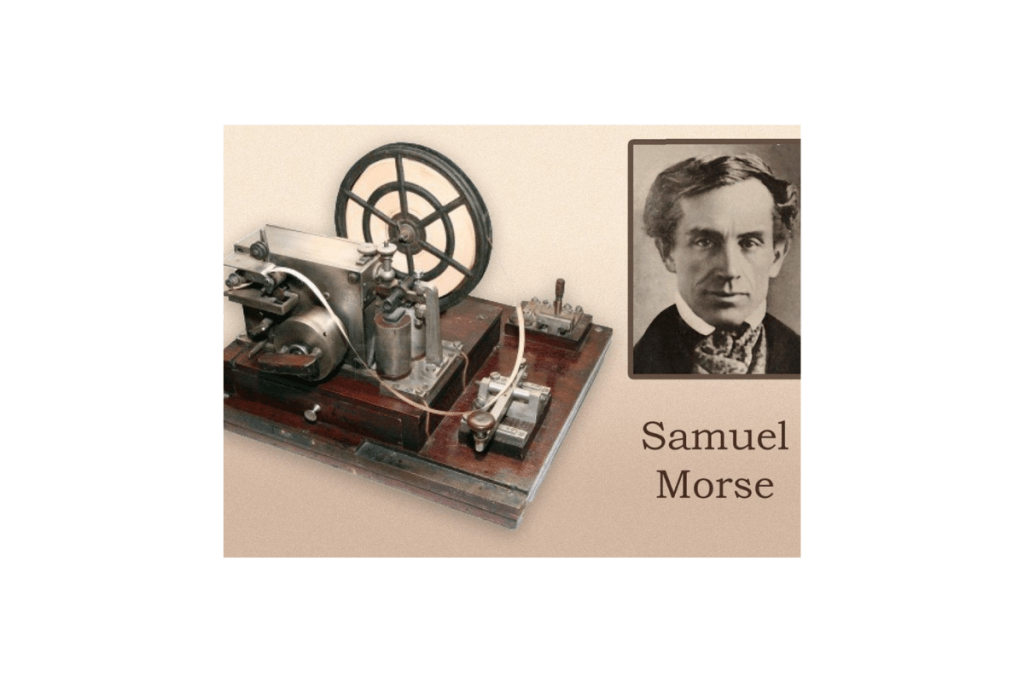
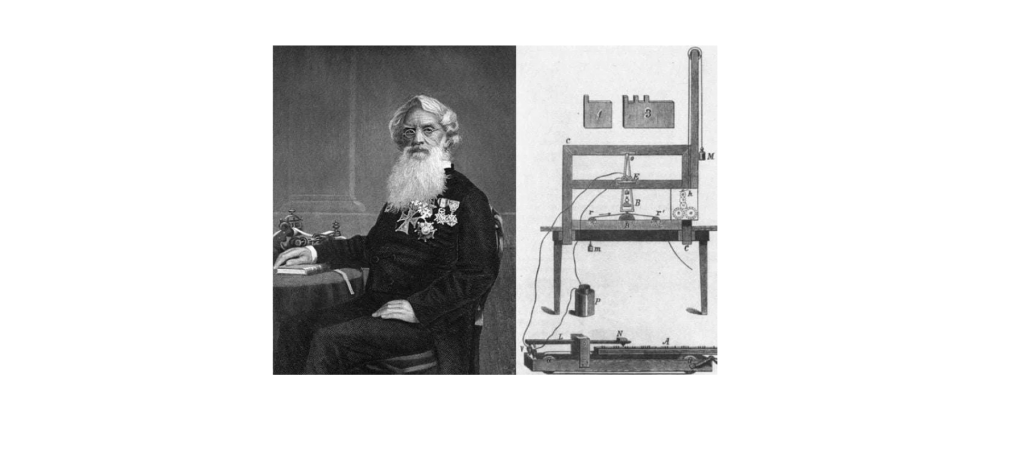
In the early 1830s, Morse witnessed the first experiments with electromagnetism and was mesmerized. That invisible force had the potential to carry signals at an unimaginable speed. The painter turned into an inventor and set himself a twofold task: first, to build a machine capable of projecting electrical impulses across endless stretches of wire; second, to design a logical, universal language that could ride upon that current. The solution turned out to be one of mathematical elegance: dots and dashes. Short and long.
Years of ridicule and poverty followed, but unyielding persistence bore fruit on May 24, 1844. From the chamber of the Supreme Court in Washington, Morse tapped his key and sent a message that traveled instantly to Baltimore: “What hath God wrought.” In a single second, distance shrank, and humanity entered the era of simultaneity.
Destiny Connects with Southern Puerto Rico
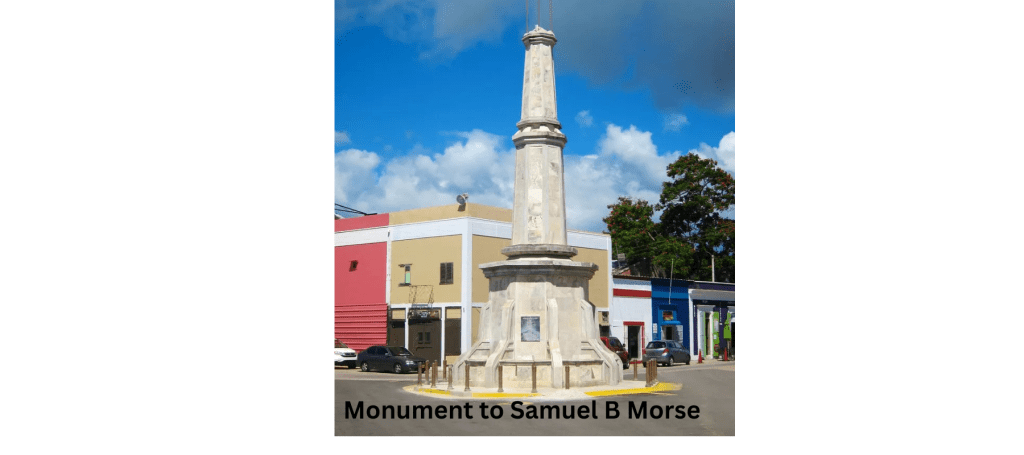
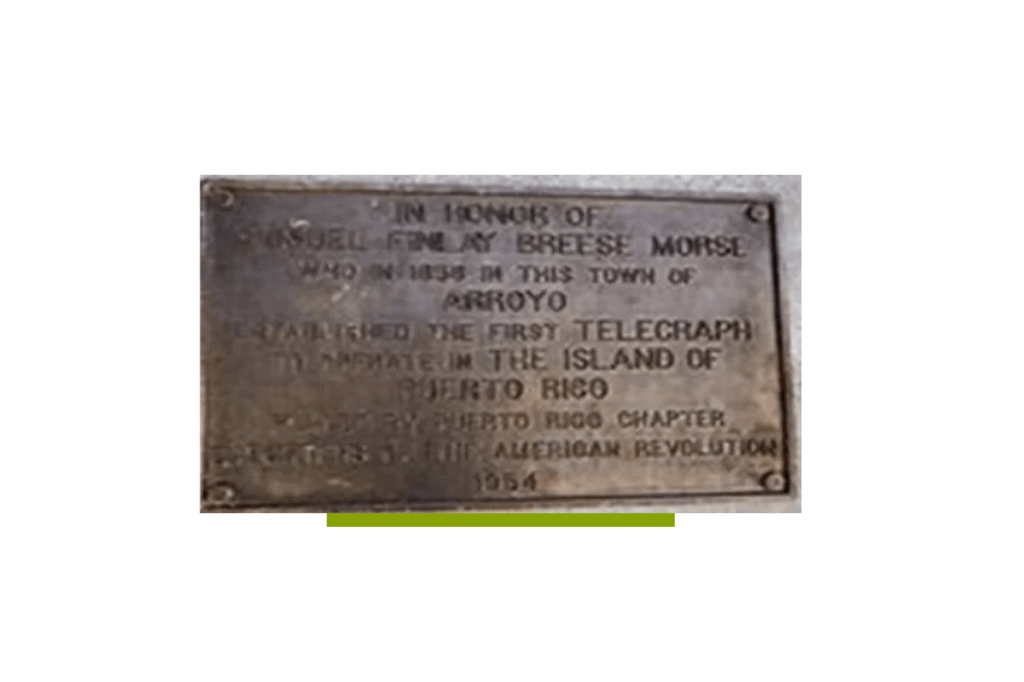
The history of the telegraph, however, held a fascinating and deeply human chapter reserved for the Caribbean. Years later, Morse’s daughter, Susan, married Edward Lind, a Danish landowner based in southern Puerto Rico. In March 1859, the now-celebrated inventor was visiting the town of Arroyo, staying at the Hacienda Enriqueta, his son-in-law’s property in the La Concordia sector.
Seeing the considerable distance and the constant back-and-forth between the hacienda and the family’s commercial warehouse on the beach (what is known today as the Malecón), Morse couldn’t help but activate his inventor’s mind. Faithful to his obsession with shortening the distances that had once cost him his wife’s final goodbye, he recommended and installed a private telegraph line to facilitate communication for the family business. It would become the first telegraph line in the entire history of Puerto Rico.
The True “First Message” of the Island
The official inauguration was scheduled for late March, and Morse planned a formal, protocol-driven message for the occasion. But destiny had other plans.
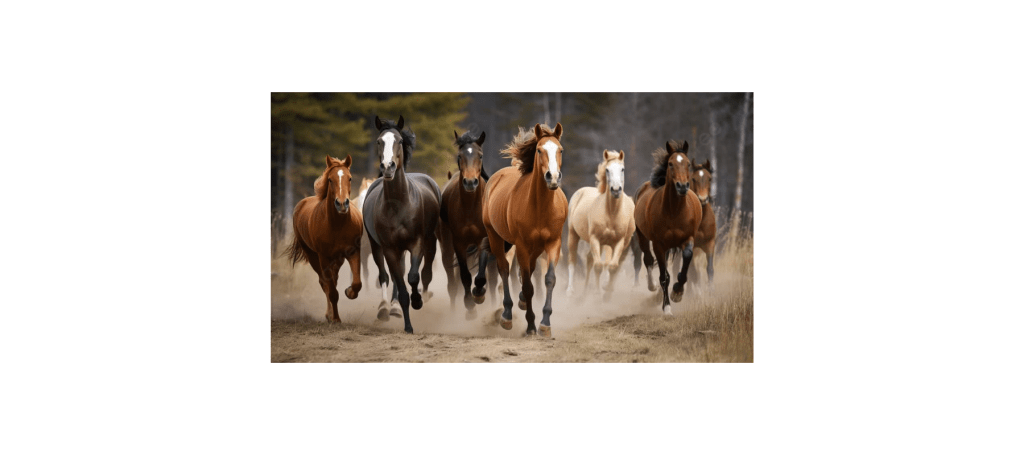
The day before the introduction of the line, Morse and his son-in-law were at the beach warehouse adjusting the final technical details. Nearby, their carriage waited patiently. Suddenly, a group of sailors passed by, talking loudly and laughing boisterously. The sudden noise startled the horses, which broke their tethers and bolted into a wild, dangerous gallop down the main street, then known as Calle Isabel II.
The danger of a serious accident was imminent. Morse needed to instantly warn the people at Hacienda Enriqueta, toward which the runaway animals were heading. If he sent a rider, they would never arrive in time. There was no choice but to break protocol, sacrifice the surprise of the official inauguration, and trust his own invention.
With his heart racing but keeping his fingers precise, Morse sat before the key at the warehouse and urgently transmitted:
“Escaped horses from here are going your direction. Stop them.”
On the other end of the line, at the hacienda, his daughter Susan—who knew her father’s code perfectly—heard the urgent clatter of the apparatus. She translated the letters, understood the danger instantly, and ordered the carriage to be stopped just in time, avoiding what could have been a true tragedy for the town.
That emergency transmission, dictated by necessity and the instinct to protect, officially became the first telegraphic message sent on Puerto Rican soil. Samuel Morse did not just shrink the distances of the world; on the streets of Arroyo, he proved that the dot and the dash were born, above all else, to save lives.


Leave a comment